
Gratitude Microdosing: Small Moments, Big Medicine
We often think of gratitude as something we should feel when everything is going well: a big life, a full heart, a list of blessings written neatly in a journal.
But what if gratitude isn’t meant to be practised in large doses?
What if it works better in microdoses?

What is Gratitude Microdosing?
Gratitude microdosing is the practice of taking tiny, regular moments to notice what is working, what is present, and what feels even slightly supportive — without forcing positivity or bypassing pain.
Not:
“I should be grateful for everything.”
But:
“Right now, this cup of tea is warm in my hands.”
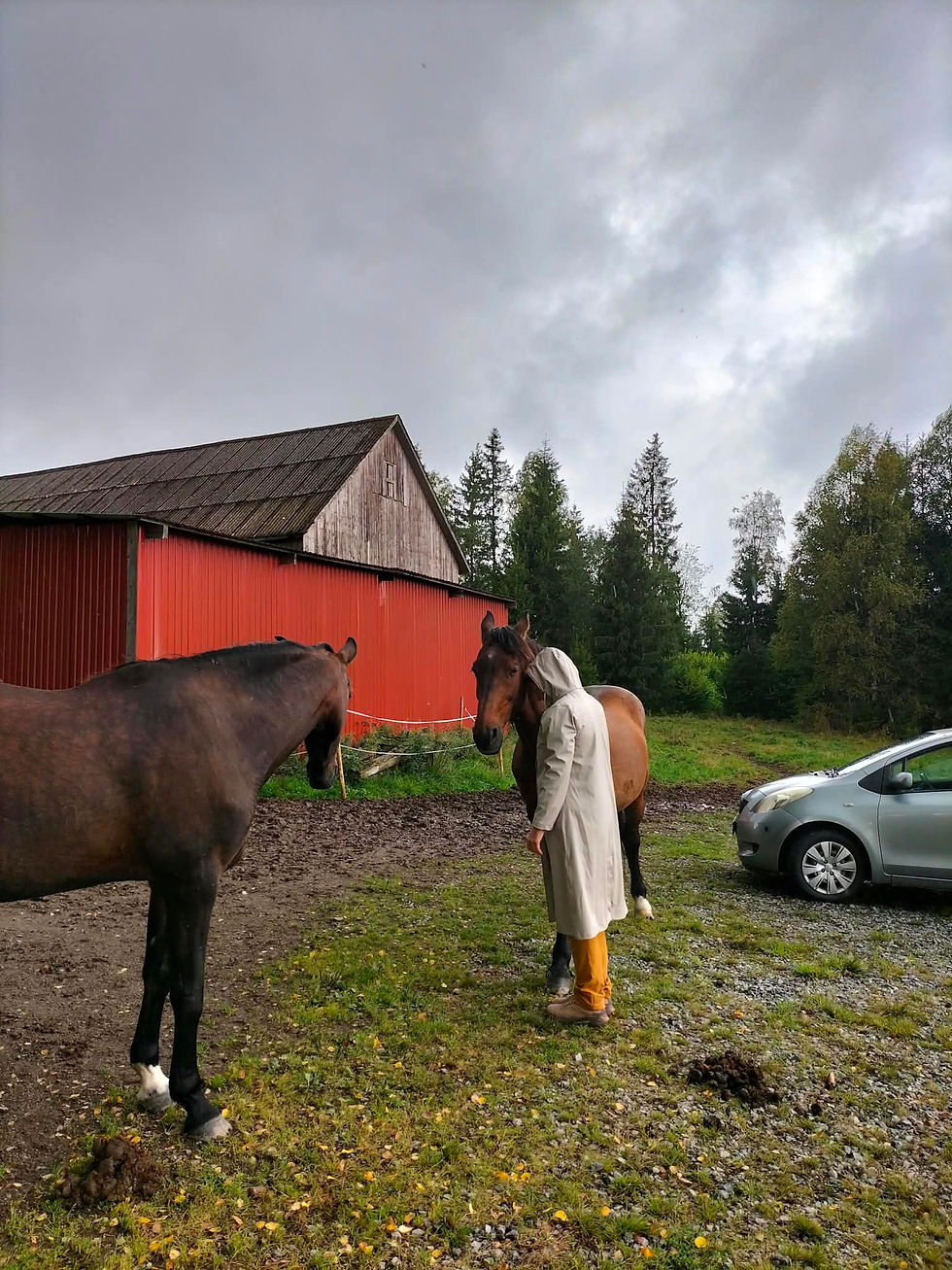
“That horse just sighed and dropped his head.”
“My breath feels a little easier than it did five minutes ago.”
These are not mindset tricks. They are nervous system signals of safety.
Why Small Gratitudes Matter More Than Big Ones
From a polyvagal perspective (Stephen Porges, Deb Dana), our nervous system is constantly scanning:
Am I safe?
Am I connected?
Am I resourced?
Micro-gratitudes give the body direct evidence:✔ I am here✔ Something is okay✔ I can feel this moment
This gently shifts us from survival states (fight, flight, freeze) towards regulation and connection.
It’s not about convincing yourself that life is good. It’s about helping your system feel safe enough to rest.
Horses Are Masters of Microdosing
When I watch horses, I see this practice naturally:
They stop and sigh.
They stand in the sun.
They lower their heads to graze.
They lie down when the conditions feel safe.
They don’t “push through” exhaustion.
They don’t bypass discomfort.
They listen for the smallest cues of safety.
When they haven’t slept properly, or the environment feels unsettled, their nervous systems show it. So do ours.
Gratitude microdosing works in the same way: small signals of safety, often.
This Is Not Toxic Positivity
Let’s be clear — this is not:
✨ “Just be grateful”
✨ “At least it’s not worse”
✨ “Look on the bright side”
Gratitude microdosing doesn’t deny pain. It simply adds regulation alongside it.
You can be grieving and grateful. Triggered and thankful.Overwhelmed and still notice one good thing.
Both can coexist.
How to Practise Gratitude Microdosing
Try one of these:
1. Body-based gratitude.
Instead of listing things, notice sensations:
– “My feet are warm.”
– “My shoulders just dropped.”
– “That breath went deeper.”
2. Nature gratitude.
One tiny thing:
– light through leaves
– the sound of birds
– wind on your face
3. Relational gratitude:
A micro-moment of connection:
– a text
– a smile
– your animal choosing to be near you
4. End-of-day microdose.
Not “three good things”
— just:
“What didn’t make it worse today?”
Why This Matters in Healing
For people working with trauma, burnout, anxiety, or grief, the nervous system often lives in hyper-vigilance.
Gratitude microdosing isn’t about mindset.
It’s about re-patterning safety.
Tiny signals.
Repeated often.
Building trust with the body again.
Just like with horses: we don’t force calm —we create conditions for it.
Final Thought
Gratitude doesn’t need to be loud. It doesn’t need to be pretty. It doesn’t need to be spiritualised.
Sometimes it’s just: “I made it through this hour.”
And that is enough.
That is medicine.

Comments