
Be Held, Not Burdened: A Gentle Micro-Contemplation Guide for Young People Navigating Faith, Trauma, and Wairua

In Te Ao Māori, healing is not something we force. It is something we return to — through connection with whenua, whānau, wairua, and the natural world that holds us.
For many rangatahi who have grown up carrying adult responsibilities, witnessing conflict, or feeling constantly alert, traditional spiritual practices like meditation or silence can feel unsafe. Their wairua might long for peace, but their tinana (body) is still in protection mode.
This is not weakness. This is wisdom — the body doing what it learned to do in order to survive.
At Hurihanga, I meet many young people who are navigating the space between trauma, identity, Christianity, culture, and wairua. Their healing requires gentleness, spaciousness, and practices that honour both the nervous system and the spirit.
This blog offers one pathway.
When Stillness Feels Like a Threat, Not a Blessing
Some people find peace in silence. Others find activation, discomfort, or panic.
For rangatahi who grew up watching for danger, managing the emotions of others, or stepping into adult roles too young, stillness has never been safe.
Their tinana learned:
stay alert
watch the room
keep the peace
hold everything together
don’t let your guard down
So when scripture says “Be still and know that I am God,” many young people hear it as pressure, not comfort.
But “stillness” can be understood very differently when seen through a trauma-informed lens and a Te Ao Māori worldview.
A More Gentle Meaning of “Be Still and Know”
Stillness does not need to mean silence, shutting down, or surrendering your vigilance.
For a nervous system shaped by struggle, “be still” can simply mean one tiny moment where the weight is not on your shoulders.
A breath where you do not have to hold the world.
A pause where your mauri can settle for a heartbeat.
And “know” can mean remembering:
I am not walking this path alone.My tūpuna walk with me.Te Wairua Tapu breathes around me.The whenua holds me.
This is stillness as safety, not stillness as a demand.
Introducing Micro-Contemplation
Micro-contemplation is a gentle alternative to meditation, designed specifically for bodies and spirits that do not feel safe slowing down.
It asks nothing more than 10–20 seconds of noticing.
No eye closing.No deep inner work.No pushing yourself.
Just small moments of awareness that softly invite the nervous system to trust again.
This aligns beautifully with Te Ao Māori, where healing often happens:
in relationship
in movement
with whenua
alongside animals
through wairua
through noticing the natural world
Especially with horses — creatures of deep emotion, intuition, and connection.
A 7-Day Micro-Contemplation Guide
Safe. Simple. Gentle. Whenua-based.
Day 1 — Grounding in Whenua
Notice your feet connecting with Papatūānuku. Say quietly:
“I am supported.”
Day 2 — The Horse’s Breath / Te Hā
Stand near your horse and notice one exhale. Let their hā remind you:
Life is breathed into me too.
Ko te hā te mauri.
Day 3 — One Sensory Anchor
Notice:
warmth
wind
birdsong
texture
sunlight
A single sensation is enough to bring you back to your body.
Day 4 — A Gentle ‘Be Still’
Pause for a few seconds.
Say:
“I don’t have to carry everything right now.”
A moment of release, not surrender.
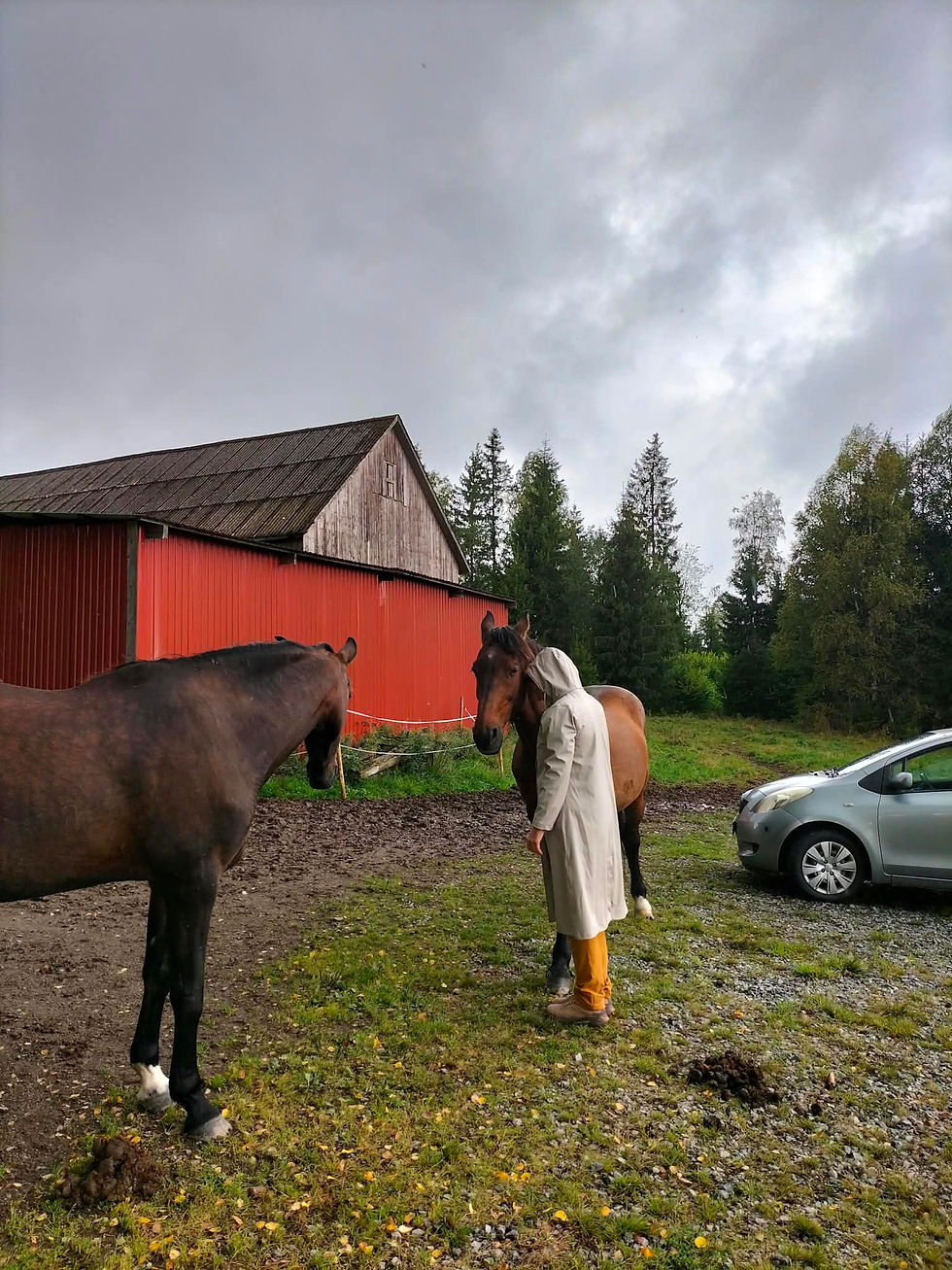
Day 5 — Hand on the Horse / Hononga
Place your hand on your horse’s shoulder.
Notice warmth, softness, movement.
Let this be a moment of hononga — connection.
Horses regulate us in a way humans cannot.
Day 6 — Name One Emotion / Whakapuaki
Ask softly:
“He aha tōku kare ā-roto i tēnei wā?”(What am I feeling right now?)
If nothing comes, that’s okay. If something comes, name it gently.
This is not analysis —it’s honouring your own experience.
Day 7 — Look at the Sky / Te Rangi
Notice:
a cloud
a colour
a shift in light
Whisper:
“This moment is enough.”
Because it truly is.
Why This Works for Rangatahi
This approach honours both science and wairua, recognising that:
the nervous system needs micro-moments, not deep practices
safety is the gateway to spiritual connection
the natural world regulates us
horses offer pure, non-verbal co-regulation
healing happens in small, repeated moments
young people need practices that don’t overwhelm them
Most importantly, it reflects the Māori understanding that healing occurs in relationship — with ourselves, with nature, with wairua, and with our wider whānau (seen and unseen).
A Closing Reflection for the Heart and Wairua
Healing doesn’t ask me to be silent. It asks me to feel safe.
Spiritual growth doesn’t require stillness. It requires honesty.
And I don’t need to be perfect. I don’t need to carry everything. I am upheld by whenua, by wairua, by the breath of life, and by the presence of those who have walked before me.
Micro-contemplation is simply a way of saying:
“Here I am in this moment.
This is what I can offer.
Let it be enough.”
And it is.

Comments